
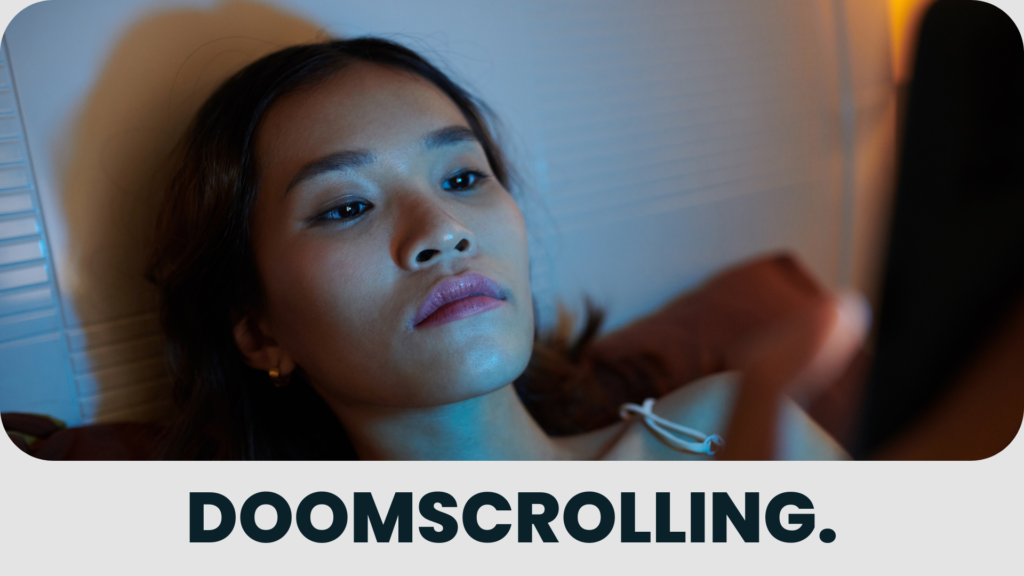
It is 11:43 PM. You are in bed, exhausted. Tomorrow promises to be long with early morning meetings, deadlines, and the uncertainty of bus schedules. You know you should sleep, but your thumb has other plans. Just one more post. One more video. One more thread about someone you will never meet in a place you will never visit.
Doomscrolling can feel overwhelming, especially during stressful times.
You are not enjoying this. Your eyes are burning, and your neck hurts, but you cannot stop.
Forty minutes later, you finally put your phone down. Your brain feels like static. You cannot remember a single thing you just saw, but somehow, you are more anxious than before. This is doom scrolling. If this sounds all too familiar, you are not alone, and it is not okay.
What Exactly Is DoomScrolling?
Many people experience doomscrolling without realizing the toll it takes.
Doomscrolling is the act of endlessly consuming distressing or harmful content online, often without a clear stopping point. It involves reading one bad news story, then another, and another, each one pulling you deeper into a spiral of anxiety and helplessness. Sometimes it is not even bad news; it is just endless, forgettable content that leaves you feeling empty.
The term gained popularity during the pandemic when everyone was glued to their screens for updates. However, this behavior has existed since social media learned how to keep us hooked.
Why Do We Do It?
The uncomfortable truth is that our brains are wired to pay attention to threats. Evolutionarily, this instinct kept us alive; if there was danger nearby, we needed to be aware of it. Social media exploits this survival instinct. With every scroll, there is a promise of new information, maybe something important, perhaps something dangerous, or something you need to know.
But that “maybe” never offers satisfaction. Your brain keeps searching for resolution, safety, and certainty. The apps are designed to give you just enough dopamine to keep scrolling, but not enough to leave you feeling fulfilled. It creates an endless cycle of seeking without finding.
The Mental Health Toll of DoomScrolling
Doom scrolling does not just waste your time; it also harms your mental health. It rewires how your brain processes information and emotions.
- It increases anxiety: Constant exposure to distressing content keeps your stress response activated. This means your body remains in a low-grade fight-or-flight mode, which can lead to chronic anxiety over time. You may feel on edge even when everything seems calm.
- It disrupts sleep: Scrolling before bed fills your brain with blue light and stimulating content when it should be winding down. Even after you put your phone away, your mind may stay active, replaying snippets of what you just saw. You lie awake, tired but unable to relax.
- It erodes your attention span: Your brain becomes accustomed to rapid content switching, five seconds per post, ten seconds per video. Over time, focusing on anything that requires sustained attention becomes more difficult. Reading a book feels impossible, and conversations feel slow. Your mind constantly wants to jump to the next thing.
- It creates emotional numbness: When exposed to crisis after crisis and tragedy after tragedy, your brain starts to protect itself by shutting down emotional responses. You stop feeling shocked. You stop feeling moved. Everything blurs into background noise, making it harder to access genuine emotion.
Breaking the Cycle
The good news is that you are not powerless.
Start by honestly evaluating what scrolling actually provides you. Does it inform you, or make you feel worse? Does it connect you to people, or does it make you feel more alone?
Your mental clarity can suffer due to doomscrolling habits.
Take a moment to consider how doomscrolling fits into your routine.
Set specific boundaries that work: Instead of saying, “I will use my phone less,” establish clear rules: no phones in the bedroom, no scrolling before 9 AM, no social media during meals. Use app timers, though annoying, that is the point.
Replace the habit: When you instinctively reach for your phone out of boredom or anxiety, do something else. Take a walk, journal, call someone, or even stare at the wall. Allow your brain to feel bored; boredom is where creativity and rest truly thrive.
Most importantly, remember this: the world will keep turning whether or not you are scrolling. The news will still be there in an hour, but your mental health might not be.
Choose accordingly.
Follow our Socials: